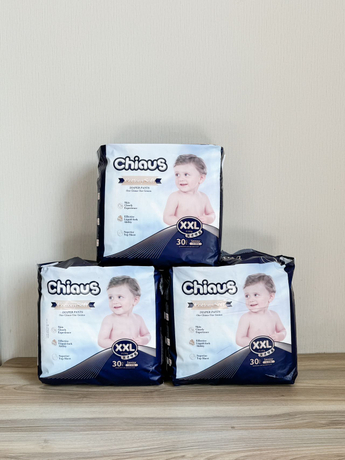
In the global maternal and infant care supply chain, procurement decisions for custom diapers are shifting from a "price-driven" approach to one focused on "compliance and risk management." Particularly in the European and American markets, diaper certifications have become a prerequisite for entering distribution channels, rather than an optional requirement.
Based on our practical experience in OEM diaper export projects, we have found that during the initial supplier screening process, over 60% of B2B buyers do not first eliminate those with high prices, but rather factories with incomplete certification systems. This also indicates that CE certification, ISO systems, and FDA compliance have become core evaluation criteria in international procurement.
This article will analyze the underlying logic of certifications related to custom diapers from a practical perspective, as well as the key evaluation methods buyers use in OEM partnerships.

I.The Necessity of a Comprehensive Diaper Certification System
1. Trade Requirements and Regulatory Mandates
For example, in the EU market, CE certification is not merely a marketing label but a legal requirement. Under the European Commission’s regulatory framework, products intended to come into contact with the human body must meet safety and health standards.
In the United States, the U.S. Food and Drug Administration(FDA) regulates products such as OEM diapers through its registration and regulatory system.
Custom diapers and other products intended for contact with infants' skin cannot enter mainstream market channels (supermarkets, e-commerce platforms, and medical channels) without compliance certifications to demonstrate their safety and reliability.
2. The Essence of Certification: Supply Chain Risk Management
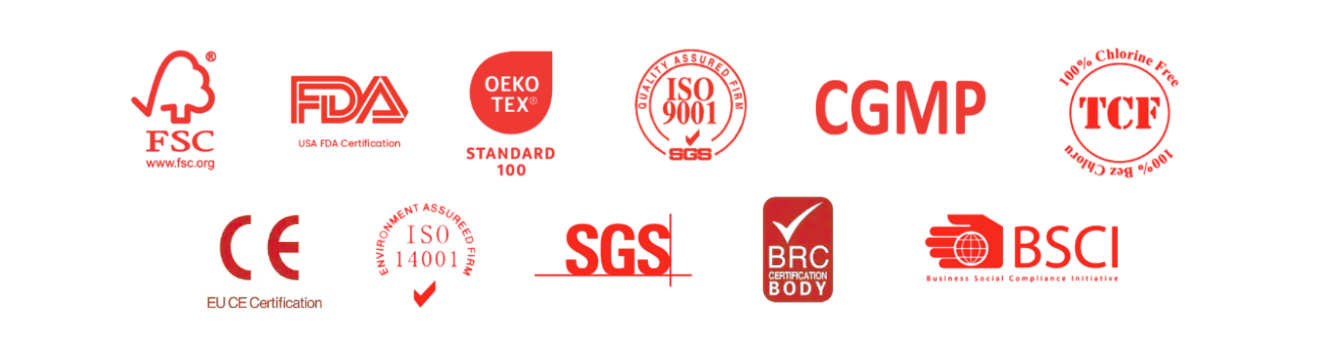
From an industry perspective, certifications related to disposable diapers are not merely a single "point-of-proof" but rather a comprehensive, multi-dimensional compliance system that spans the entire supply chain.
For professional manufacturers with long-term experience in overseas markets, comprehensive international certifications serve not only as a market entry requirement but also as a concentrated demonstration of manufacturing capabilities, quality control systems, and social responsibility.
Together, these certifications support standardized, compliant, and systematic operations throughout the entire product life cycle—including R&D, production, environmental protection, safety, and social responsibility.
Establishes and operates a quality management system to ensure stable production processes, consistent product quality, and the capacity for continuous improvement.
Standardizes environmental management, controls the environmental impact of production processes, and promotes green manufacturing and sustainable development.
Focuses on occupational health and safety management to ensure the safety of production personnel and reduce operational safety risks.
Practice social responsibility, comply with international labor standards, business ethics, and supply chain compliance requirements, and enhance global supply chain recognition.
Verify that products are free of harmful substances, ensuring safety and environmental friendliness for skin-contact applications.
Address specialized compliance and material safety requirements in the hygiene products sector to strengthen product hygiene and safety assurance.
Meets mandatory safety, health, and environmental requirements for the EU market, enabling legal market access in the EU.
Complies with relevant regulations of the U.S. Food and Drug Administration, achieving market access and regulatory compliance in North America.
SGS Testing and Certification
Provides product testing, factory audits, and quality verification through an authoritative third-party organization, enhancing customer confidence in product quality.
Ensures that wood-based materials used in products, such as pulp and packaging, originate from sustainably managed forests, meeting international environmental and traceability requirements.
These certifications complement one another, forming a comprehensive risk control and brand trust ecosystem across multiple dimensions—including quality management, environmental management, occupational safety, social responsibility, material safety, market access, third-party credibility, and sustainable procurement. They also serve as a core indicator of a diaper manufacturer’s capacity for large-scale, international, and compliant export operations.

3. Risks Most Often Overlooked by Buyers in Partnerships
Common issues in OEM diaper partnerships include:
Certificates are valid but do not cover the current product models; (for example, they may cover only disposable diapers but not pull-up diapers.)
CE certification is present, but the Technical File is missing.
ISO certificates have expired or have not been updated.
Key Takeaway:
Certificates alone do not guarantee compliance; the integrity of the management system is what truly matters.
II. CE Certification: The Key Requirement for Custom Diapers to Enter the European Market
1. The True Meaning of CE (Often Misunderstood by Buyers)
The essence of CE certification is:
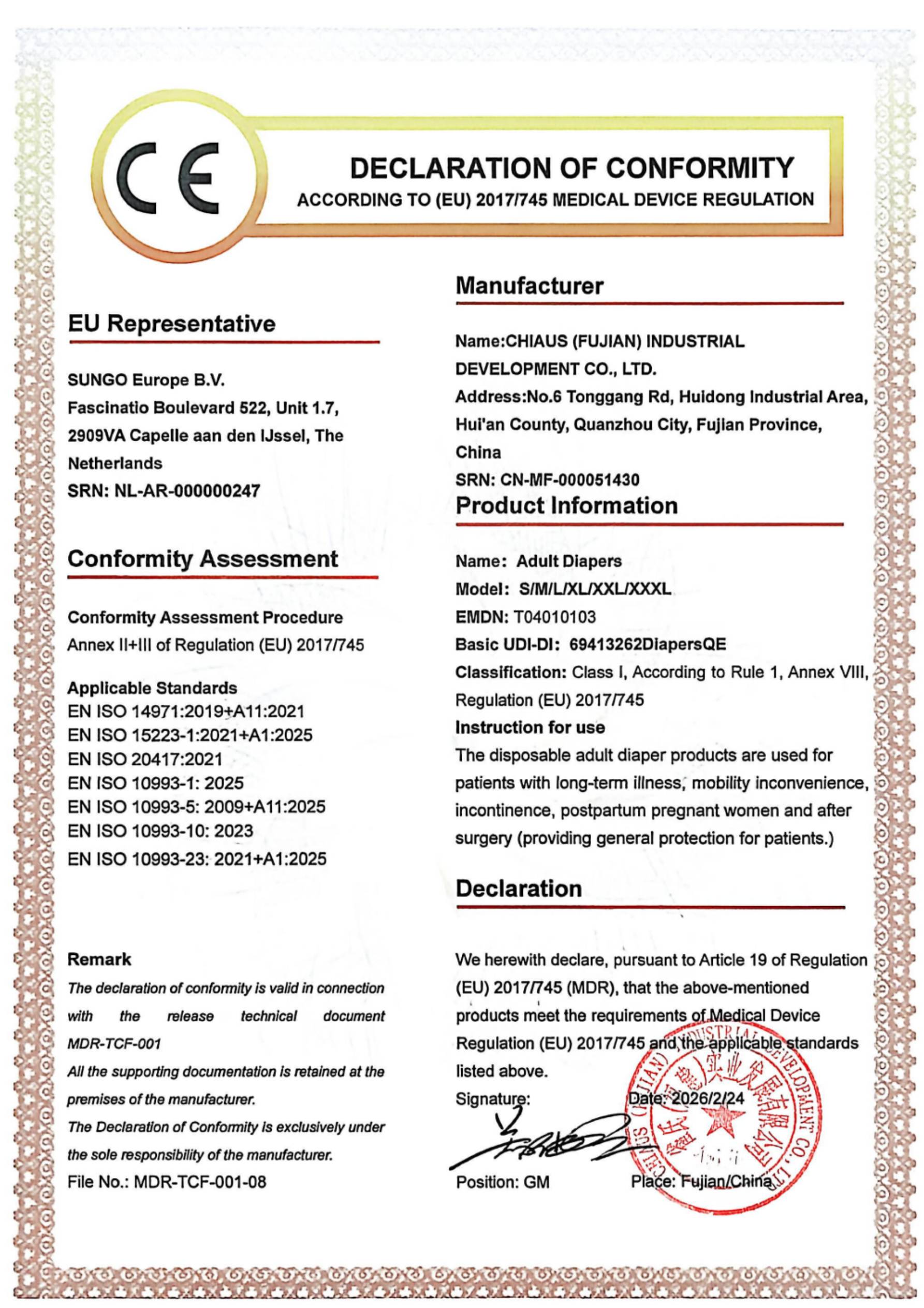
The manufacturer declares that the product complies with relevant EU regulations and assumes legal responsibility.
It is not a "quality certification," but rather a "declaration of conformity supported by technical documentation."
2. Key Requirements for Custom Diapers Under the CE System
For custom diaper products, CE primarily focuses on:
Raw material safety (absence of irritating chemicals)
Skin contact safety (dermatological compatibility)
Compliance of labels and instructions
Special Note:
Many OEM diaper suppliers only provide the "CE mark" but cannot provide complete documentation; this is a high-risk signal.
3. Standard Process for Buyers to Verify CE Certification
It is recommended that you obtain the following during procurement:
Declaration of Conformity (DoC)
Complete Technical File
Third-party test reports (e.g., SGS / Intertek)
All our custom diapers products are supported with full CE technical documentation available upon request.

III. ISO Systems: The Foundation of Quality Consistency in OEM Diapers
1. Why Does ISO Determine the Reliability of Long-Term Partnerships?
In our actual OEM projects, we have found that:
The customer complaint rate is highly correlated with the maturity of the ISO system.
ISO is not merely a certificate; it represents process management capability.
Based on the practical operational experience of major OEM diaper exporters, ISO is not merely a set of documents on paper, but a strict set of standards that must be rigorously enforced throughout the entire process—from R&D, procurement, and production to quality inspection and after-sales service. It is particularly critical for ensuring product quality consistency, meeting delivery deadlines, passing customer factory audits, and maintaining compliance with overseas regulations.
In mature OEM diaper factories, the ISO system (centered on the ISO 9001 Quality Management System and integrated with ISO 14001, ISO 45001, etc.) is deeply embedded in key production stages:
(1) Process control of the SAP absorbent core and core structure
For the diaper's core functional layer—the super absorbent polymer (SAP) absorbent core structure—the ISO system requires the establishment of standardized process parameters and operating procedures:
Fixed SAP application rates, distribution uniformity, bulkiness, and compaction processes;
Control of key quality risks such as core delamination, clumping, layer separation, and reverse permeation;
Lock in parameters for production speed, adhesive application positions, and the adhesion of covering materials to prevent fluctuations in absorbency caused by operator variability.
Through process control, ensure that the absorption rate, reverse flow, and water-locking capacity remain consistent for every product.
(2) Raw Material Batch Traceability System
ISO mandates traceability requirements, which are specifically implemented in the diaper supply chain as follows:
All raw materials—including non-woven fabric, SAP, wood pulp, hook-and-loop fasteners, elastic bands, and backing film—must undergo mandatory inspection upon arrival, and batch information must be recorded;
During production, raw material batch numbers, production shifts, equipment serial numbers, and production times are linked;
Enabling full-chain reverse traceability from "finished product → production batch → raw material batch → supplier."
In the event of a customer complaint or quality anomaly, the scope of the issue can be quickly identified to prevent the risk of batch-wide contamination. This is also a mandatory inspection item during factory audits by European and American clients.
(3) Standardized Sampling and Release Mechanism for Finished Products
The ISO system transforms finished product inspection from "judgment based on experience" into a quantifiable, repeatable, and verifiable standard process:
Define testing items and acceptance criteria for appearance, dimensions, water absorption, reverse permeation, lateral permeation, leakage, tensile strength, and adhesive strength;
Implement AQL sampling standards with fixed sampling ratios, inspection methods, and acceptance rules;
Record and archive inspection data in real time; strictly enforce isolation, review, and rework/scrap procedures for non-conforming products to prevent their shipment.
(4) Closed-Loop Customer Complaint Handling and Continuous Improvement
ISO emphasizes the PDCA cycle and continuous improvement, establishing a standardized process for handling customer complaints:
Complaint reception → Issue registration → On-site verification → Root cause analysis (People / Machine / Material / Method / Environment) → Corrective actions → Effect verification → Prevention of recurrence;
All customer complaints must be documented in writing and used to drive optimization of production, inspection, or management processes;
Regular statistical analysis of defect data is conducted to reduce defect rates at the source and enhance long-term quality stability.
Overall, the ISO system enables diaper OEM factories to move away from "extensive production" and achieve controllable processes, stable quality, traceable issues, and implementable improvements. It serves not only as the basic threshold for meeting international customer requirements but also as the core guarantee for large-scale, stable contract manufacturing.

IV. The Logic Behind FDA Regulation: The Key to Entering the U.S. Market with Custom Diapers
1. The FDA Is Not a "Certification" but a Regulatory System
Many buyers mistakenly believe that the FDA is a certification body, but in reality:
The FDA emphasizes registration and filing
Emphasizes compliance with manufacturing processes
Emphasizes product safety responsibility
2. Key Areas of Focus for the FDA
For custom diapers:
Material safety (especially the skin-contact layer)
Labeling standards
Factory quality management systems
3. CE vs. FDA: Key Differences Buyers Must Understand
Item | Type | Market | Difficulty |
CE | Declaration of Conformity | EU | Moderate |
FDA | Regulatory System | U.S. | Higher |
Expert Advice:
If your target customers are on Amazon or in North American channels, FDA compliance is more critical than CE certification.
V. How to Choose an OEM Diaper Supplier with Comprehensive Diaper Certifications?
1. Look Beyond Certificates; Examine the "System"
We recommend evaluating suppliers at three levels:
Level 1: Verify the authenticity of the certificates
Level 2: Ensure the certificates match the products (custom diapers)
Level 3: Assess the supplier's ability to maintain and update certifications
2. Do They Possess Genuine Customization Capabilities for Custom Diapers?
A truly capable OEM diaper manufacturer should support:
Customization of baby diaper structures
Adjustment of the elastic system in baby pull-up pants
Design of absorption solutions for adult diapers
Conclusion
For international buyers, especially brand owners and distributors, the key is not just to check whether a supplier "has certificates," but to verify whether those diapers certifications are valid, complete, and applicable to the actual custom diapers product you are sourcing.
FAQ
1. Do all custom diapers require CE certification?
Not all custom diapers legally require CE certification, but if you plan to sell in the European Economic Area (EEA), CE compliance is typically essential. Even when not mandatory, many distributors and retailers still require CE certification as part of their supplier approval process.
2.Why are diapers certifications important for custom diapers branding?
For brand owners, diapers certifications directly impact:
Market entry (EU, US, Middle East, Southeast Asia)
Platform approval (Amazon, retail chains)
Consumer trust and brand credibility
Without proper diapers certifications, even high-quality custom diapers may face legal and commercial barriers.
3.How can I verify if a supplier's diapers certifications are real?
To verify diapers certifications for OEM diapers, you should request:
Declaration of Conformity (Do C) for CE certification
Full technical documentation (Technical File)
Valid ISO certificates with issuing body details
Third-party lab test reports (e.g., SGS)
You can also cross-check certification bodies through official databases such as those provided by the European Commission.